RFID Labels
Precision Cutting for RFID-Enabled Labels
RFID label converting presents unique challenges. The label construction incorporates an RFID inlay containing a chip and antenna, creating variations in material thickness across the web.
Our flexible die solutions help label converters achieve the precision and repeatability needed to cut RFID label constructions while protecting the critical RFID components within the label.
Precision where it matters. Consistency when you need it.
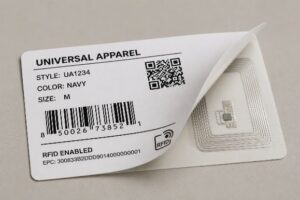
An RFID label combines traditional label materials with an RFID inlay. Depending on the construction, the label may include:
- Printed face stock
- Pressure-sensitive adhesive
- RFID inlay with antenna and integrated chip
- Release liner
The presence of the RFID inlay can create localized changes in material thickness. The chip area, in particular, may be significantly different from the surrounding label construction.
For converters, successful die-cutting requires more than simply cutting through a standard pressure-sensitive label. Tooling must be selected and configured with the complete material construction in mind.
Our Approach
Every RFID label construction is different. That is why the tooling solution starts with understanding your application. Our team works with converters to evaluate the critical characteristics of the label construction, including:
- Overall material construction and thickness
- RFID chip and antenna location
- Chip dimensions and thickness
- Label geometry and cutting requirements
- Liner and Face construction
- Magnetic cylinder and tooling configuration
Using this information, we help determine the appropriate flexible die solution for the application. We also partner with key OEMs and materials suppliers to ensure a seamless fit from tooling through production.
Explore More Web Handling Solutions for RFID Applications
Precision die cutting is only part of a successful RFID label converting process. Maxces also offers supporting solutions for guiding, tension control, and slitting to help you run RFID label applications with confidence:
- Tidland Slitting solutions for clean, accurate web separation
- Fife Guiding systems to keep RFID label webs precisely aligned
- MAGPOWR Tension Control solutions to protect delicate RFID inlays throughout the run
Frequently Asked Questions
What is an RFID label?
An RFID label is a label or tag that incorporates an RFID inlay containing a chip and antenna.The RFID component enables information to be communicated wirelessly without requiring the same line-of-sight scanning used by traditional barcodes.
Can flexible and solid dies be used to cut RFID labels?
Yes. Flexible and solid die tooling can be developed for RFID label applications. The appropriate solution depends on the label construction, cutting geometry, RFID inlay configuration and location of the chip and antenna.
Why is cutting an RFID label different from cutting a standard label?
RFID labels may have variations in thickness because of the antenna and chip incorporated into the construction. The chip area can create a localized area that requires additional consideration when evaluating the material and tooling configuration.
What information is needed to evaluate an RFID label application?
Material construction, overall thickness, chip dimensions, chip and antenna location, label geometry and existing converting equipment information can all be important in evaluating the tooling solution.
Can you help evaluate our specific RFID label construction?
Yes. Our team can work with you to review your material construction and application requirements to help identify the appropriate tooling approach.
Featured Products
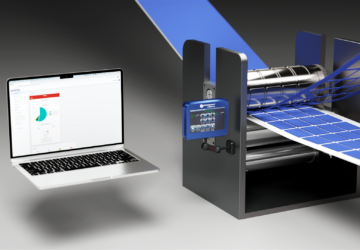
RotoAdjust Dual Adjustable Anvil
The new RotoAdjust offers state-of-the-art Industry 4.0 automation and data analytics to run better, faster, and smarter. Unlock tomorrow’s automation potential today.
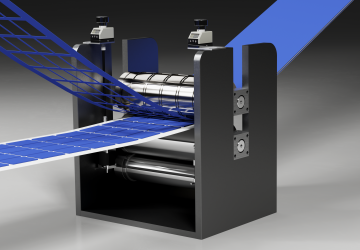
AccuAdjust Dual Adjustable Anvil
AccuAdjust solves liner variability issues and allows easy cutting of PET, Glassine, Kraft and more with a simple turn of a precision digital dial. Cut perfect labels and minimize material consumption no matter the liner material.
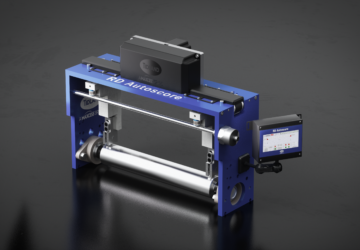
RD AutoScore
Keep operators safe and reduce setup time with the Tidland RD AutoScore system.
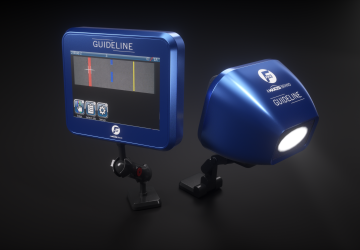
GuideLine & Guideline High Resolution (HR) Digital Line Guide Sensor Overview
Detect lines, edges of lines, graphic patterns, and more where traditional line sensors don’t work at a competitive price point. The GuideLine is suitable for the most demanding line guide applications.